What Is Wooden Toy Customization for Your Brand?

Time:2026-10-11 Author:Aria
0%

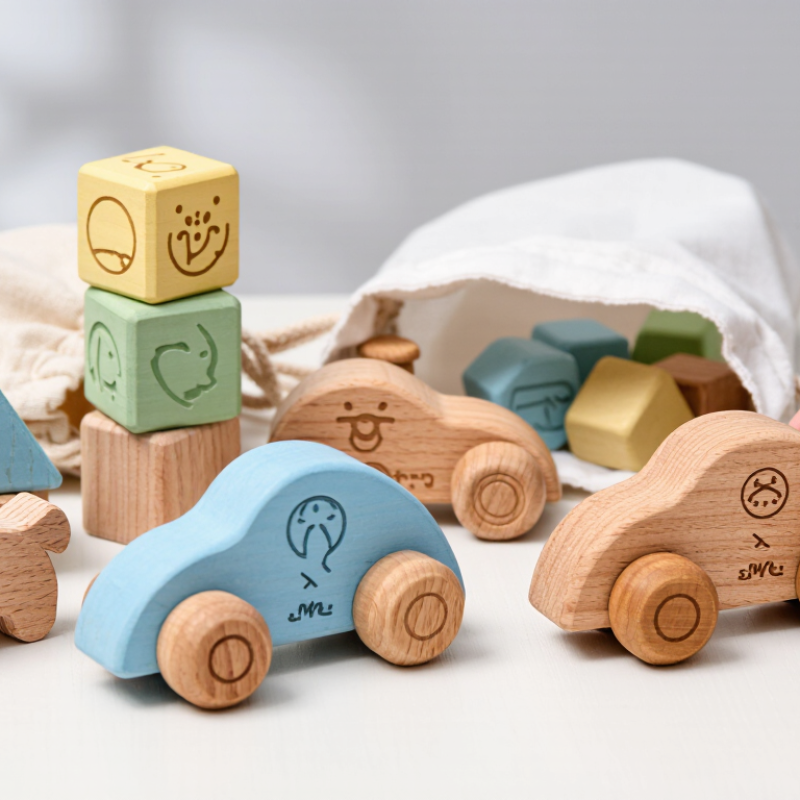
Wooden toy customization can turn a simple beechwood shape into a recognizable brand experience. It involves more than adding a logo. You must connect the toy’s form, colors, materials, packaging, and play value with your brand’s promise.

Charles Eames, an influential design expert, once said, “The details are not the details. They make the design.” His words remain useful when considering how to customize wooden toys for your brand. A rounded edge, muted paint color, engraved icon, or cotton storage bag can influence how customers remember the product. Small choices matter.

The process usually begins with a clear product brief. Define the target age, learning purpose, preferred wood, finish, dimensions, and production quantity. Then create a physical prototype. Hold it. Rotate it. Watch how a child might grip it. A first sample may feel too heavy, too bright, or strangely silent. That uncertainty is useful. It reveals what digital drawings cannot show.

Experienced suppliers should provide material details, finish information, sample approval, and appropriate safety documentation. Ask how they control splinters, loose parts, paint durability, and packaging quality. Responsible customization also considers recognized safety standards and sustainable sourcing, such as certified wood where suitable. Do not treat compliance as decoration.

Your brand story should appear through thoughtful play, not excessive printing. A custom shape may communicate more than a large logo. Sometimes, less feels more honest. The strongest wooden toy is memorable, safe, practical, and pleasant to use. It should look like your brand, while still feeling like a real toy.
What Is Wooden Toy Customization for Your Brand?

What Is Wooden Toy Customization? Definition, Scope, and Brand Use

What Is Wooden Toy Customization for Your Brand?

Wooden toy customization means adapting a wood-based toy to match a brand’s identity, audience, and sales channel. It can include shapes, colors, engraving, packaging, play functions, and age-specific details. The scope is wider than printing a logo. A customized stacking set might use muted colors, tactile grooves, and a reusable cotton pouch. A puzzle may reflect a learning theme through its pieces and difficulty level.

Demand supports careful differentiation. Fortune Business Insights valued the global toy market at USD 108.7 billion in 2023, with continued growth projected through 2032. However, Circana reported that U.S. toy sales fell 8% in 2023, reaching about USD 28.6 billion. These figures suggest that customization should solve a clear product problem, not add decoration alone. Material selection, safety testing, paint durability, and production consistency require experienced supplier review. A wooden toy can look warm and premium, yet poor sanding quickly damages user trust. The idea is promising. The execution is harder.

Tips: Define the user, play goal, and target price before designing. Request a physical prototype. Check edges, odor, paint adhesion, and packaging strength. Ask suppliers for test documentation and traceable material information. Keep one signature detail, not ten. Customization is not automatically valuable. Sometimes, a simpler toy feels more honest. Track returns, reviews, and repeat orders, then revise the next production run.

What Is Wooden Toy Customization for Your Brand?

Wooden toy customization means adapting a toy’s design, materials, appearance, packaging, or function to fit a specific product concept. The chart presents a practical planning reference for the main customization layers, using the typical number of design elements that may require review in each layer.

Which Wood, Finish, and Age Grade Fit Your Custom Toy?

In custom wooden toy work, wood choice shapes more than appearance. Maple feels dense and smooth, with a fine grain for stacking blocks and precision pieces. Beech offers similar strength, while pine is lighter and shows softer dents. Rubberwood can be practical, but its surface preparation must remain consistent. Small details matter. A rough edge or deep crack can affect comfort, durability, and inspection results. Even sanding matters; paint should not hide careless preparation.

Finish should match the toy’s daily use, not only its color. A water-based coating may reduce odor, but it is not automatically suitable for children’s products. Ask suppliers for current safety and coating test documents. Use rounded edges and stable colorants designed for toy applications. Dark colors can reveal fingerprints, while pale finishes may show handling marks quickly. I have seen attractive samples become impractical after repeated cleaning. That mistake is easy to make.

Age grade should guide the shape, size, and construction from the beginning. Toys for children under three should avoid detachable small parts and weak joints that could create choking risks. Pieces for older children can include more complex assembly, but foreseeable misuse still deserves attention. Age grading is not simply a sales label. It connects design decisions with safety testing, supervision, and real behavior. A careful prototype review may expose flaws that a polished sample hides.

How Does Custom Wooden Toy Development Work From Brief to Sample?

What Is Wooden Toy Customization for Your Brand?

Custom wooden toy development begins with a clear brief, not a sketch alone. The brief should define the toy’s purpose, target age, dimensions, colors, estimated quantity, and expected retail price. It should also describe the desired play experience. A stacking toy needs different engineering from a pull-along figure. Small details matter. A reference image, rough drawing, or physical sample can reduce confusion during communication.

The development team then reviews materials, structure, and production limits. Suitable wood must be dry, stable, and free from visible defects. Designers check edges, joints, moving parts, and surface finishes. They also consider age-related safety requirements and arrange appropriate testing before production. A practical team should explain what can be achieved, not simply accept every request. Some shapes look attractive on screen but become weak or difficult to manufacture.

A prototype sample follows the approved direction. It allows the team to inspect weight, balance, color accuracy, and handling comfort. The first sample is rarely perfect. Wood grain may appear different from the digital design, and a painted edge may feel too sharp. That is useful feedback. Adjustments can include reshaping a handle, changing a coating, or improving a joint. Sample comments should be specific, with marked photos and measured revisions. Approval should happen only after the updated sample reflects the agreed brief and passes the required quality checks.

What Do EN 71-1, ASTM F963-23, and ISO 8124 Require?

What Is Wooden Toy Customization for Your Brand?

Custom wooden toys need more than attractive engraving or a warm natural finish. Their design must support the safety rules of the destination market. EN 71-1 examines mechanical and physical risks, including sharp points, sharp edges, small parts, strength, and foreseeable misuse. A painted pull-along toy may look harmless. Its wheel, cord, or handle can still create a test failure.

ASTM F963-23 sets detailed toy-safety requirements for the United States. It covers construction, accessibility of components, small parts, surface coatings, sound, and other hazards. The standard works alongside broader consumer-product obligations. ISO 8124-1 provides internationally recognized mechanical and physical safety requirements. It is useful for global development, but it does not automatically replace local law. Always verify the applicable edition and market rules.

Customization should begin with age grading, material records, and prototype testing. Use controlled wood moisture, secure joints, smooth surfaces, and finishes supported by compliance documents. Keep decoration away from areas that may chip or detach. A sample can pass visual inspection and still fail after repeated drops or pulling. This is where many projects become uncomfortable. Designs often need revision. A thinner piece may reduce cost, yet create a breakage risk. An experienced testing laboratory should assess representative production samples, not only a perfect prototype. Keep drawings, supplier declarations, test reports, and change records together. Small changes in paint, hardware, or dimensions can affect the result.

How Can Brands Measure Custom Toy ROI, Safety, and Market Fit?

What Is Wooden Toy Customization for Your Brand?

How Can Brands Measure Custom Toy ROI, Safety, and Market Fit?

Wooden toy customization turns a standard play object into a measurable product experiment. Track unit cost, customization labor, packaging, shipping, and returns separately. Then compare contribution margin against campaign spending. McKinsey’s 2021 personalization research found that 71% of consumers expect personalized interactions. However, interest does not guarantee purchase. A small pilot is safer than a large launch.

Measure market fit through conversion rate, add-to-cart rate, repeat purchase, and return reasons. Test two designs with similar prices. Observe which toy earns longer play sessions and fewer customer questions. Short interviews can reveal whether parents value names, colors, learning functions, or gift packaging. The weak point is sample size. Ten enthusiastic buyers cannot represent a whole market.

Safety must be measured before advertising performance. CPSC surveillance estimated about 188,400 U.S. emergency-department injuries involving toys in 2023. Wooden products require age-appropriate design, smooth surfaces, secure parts, and controlled coatings. Testing should follow applicable requirements, such as ASTM F963 or EN 71, based on the selling region. Keep test reports, material records, batch codes, and supplier checks. A practical scorecard can combine safety pass rate, defect rate, margin, conversion, and customer feedback. Some assumptions will fail. That is useful evidence.

FAQS

Which wood is suitable for a custom wooden toy?

Maple feels dense and smooth, making it suitable for stacking blocks and precise pieces. Beech offers similar strength. Pine is lighter but dents more easily. Rubberwood can work when surface preparation stays consistent.

How should the toy’s finish be selected?

Choose a finish based on daily use, cleaning, and handling. A water-based coating may reduce odor, but it is not automatically child-suitable. Request current coating and safety documents. Attractive color is not enough.

Why do sanding and rounded edges matter?

Rough edges can make handling uncomfortable and weaken inspection results. Deep cracks may affect durability. Paint should never hide poor sanding. Small flaws become obvious after repeated handling.

How does age grading affect toy design?

Age grading guides size, shape, joints, and construction from the beginning. Toys for younger children should avoid detachable small parts. Older children may use more complex assemblies. Real behavior still matters.

What information should a custom toy brief include?

Include the purpose, target age, dimensions, colors, quantity, and expected retail price. Describe the intended play experience. Add a sketch, reference image, or physical sample. Clear details reduce design confusion.

What happens during prototype development?

The team reviews wood stability, joints, edges, moving parts, and surface finishes. A prototype reveals weight, balance, color, and handling comfort. The first sample is rarely perfect. That is useful feedback.

How can a sample be reviewed effectively?

Mark problems on photographs and record measured revisions. Check painted edges, handle comfort, joint strength, and color accuracy. Request changes when necessary. Approval should follow updated checks, not excitement alone.

How can market fit and return on investment be measured?

Track unit cost, customization labor, packaging, shipping, returns, and campaign spending separately. Compare conversion, add-to-cart activity, repeat purchases, and return reasons. Start with a small pilot. Ten enthusiastic buyers are not a market.

Conclusion

Wooden toy customization helps a brand turn a general play product into a distinctive, age-appropriate, and market-ready item. Learning how to customize wooden toys for your brand begins with defining the product’s purpose, target users, design language, size, functions, packaging, and expected production volume. Material selection should consider wood type, durability, surface smoothness, coating safety, and the suitable age grade, while finishes should support both appearance and regular use.

The development process typically moves from a clear creative brief to technical drawings, material confirmation, prototypes, safety testing, revisions, and final production approval. Brands should evaluate requirements related to EN 71-1, ASTM F963-23, and ISO 8124, including mechanical safety, physical properties, flammability, chemical migration, and labeling where applicable. To measure success, track development costs, testing expenses, production efficiency, customer response, repeat purchases, return rates, safety records, and sales performance. Combining these indicators helps confirm whether the customized toy delivers strong brand value, reliable safety, and genuine market fit.

Aria

Aria

Aria is a dedicated marketing professional with a deep passion for innovative strategies and a keen understanding of our company's product offerings. With a wealth of experience in the industry, Aria excels at crafting engaging content that highlights the unique features and benefits of our......