What Is a Private Label Wooden Toy Business and How to Start?

Time:2026-09-21 Author:Liam
0%

A private label wooden toy business sells toys manufactured by a third-party supplier under your own brand name. You control the product concept, packaging, pricing, and customer experience. The factory handles production, but your company remains responsible for product decisions and market positioning.

The opportunity is real, although it is not effortless. Circana reported that global toy sales declined by 7% in 2023 across its tracked markets, showing how strongly families respond to prices and economic pressure. Meanwhile, Fortune Business Insights valued the global toys market at approximately USD 108.7 billion in 2023. Wooden toys represent a smaller segment, but their tactile materials, reusable designs, and screen-free appeal attract parents, educators, and gift buyers. Market estimates differ widely, so treat forecasts as direction, not certainty.

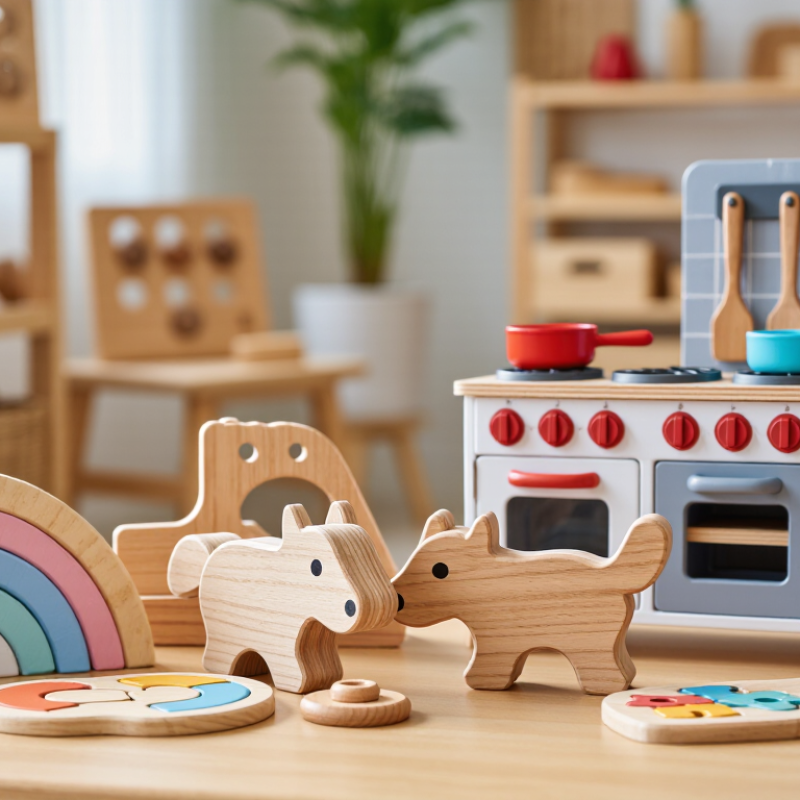
Learning how to start a private label wooden toy business begins with a focused product idea. A stacking rainbow, animal puzzle, or small pretend-play kitchen needs more than attractive photography. You must check wood quality, paint adhesion, choking hazards, age grading, packaging strength, and supplier traceability. Standards such as ASTM F963 in the United States and EN 71 in Europe provide important safety frameworks, while FSC certification may support responsible material sourcing. Requirements vary by market.

Small details matter. A splintered edge can damage trust quickly. A vague warning label can create expensive problems. I would not assume that “natural” automatically means safe, sustainable, or profitable. Test samples independently, document supplier communication, and calculate landed costs before ordering inventory. The strongest brands combine practical safety knowledge, honest claims, distinctive design, and consistent customer feedback.
What Is a Private Label Wooden Toy Business and How to Start?

What Is a Private Label Wooden Toy Business?

A private label wooden toy business sells toys made by a manufacturer under a seller’s own brand name. The seller usually chooses the toy style, wood finish, packaging, and product details. The factory handles production, while the business owner manages design decisions and customer expectations.

This model can begin with one carefully selected product, such as a stacking set or wooden puzzle. A responsible owner checks the wood source, paint composition, edges, small parts, and packaging instructions. Age guidance must be clear and supported by appropriate safety testing. Product samples should be inspected before placing a larger order. A polished sample can still hide rough edges.

The business also requires practical knowledge beyond product selection. Owners need to compare material quality, minimum order quantities, production timelines, and shipping conditions. Written specifications help prevent changes during manufacturing. Photos are useful, but physical samples reveal weight, texture, smell, and durability more accurately. Some designs may look attractive but feel uncomfortable in a child’s hands. That mistake is easy to make. Reliable sellers keep inspection records and describe products honestly. They avoid promising perfect craftsmanship when natural wood may contain small variations. Customer feedback can expose weak points, including loose pieces, unclear instructions, or packaging that damages easily. These details shape whether a private label wooden toy business earns lasting trust.

How Does the Private Label Toy Business Model Work?

A private label wooden toy business sells toys made by a manufacturer under the seller’s own name and packaging. The seller controls the product concept, colors, materials, and customer experience. The factory handles production, but the relationship requires active supervision. A wooden stacking set may need sample approval, wood moisture checks, smooth-surface inspections, and clear age guidance. Safety documentation should match the markets where the toy will be sold.

The business model usually begins with product research and a focused customer group. Parents may value simple shapes, durable finishes, and quiet play. After selecting a design, the seller requests prototypes and confirms minimum order quantities. Manufacturing follows only after checking dimensions, paint quality, packaging, and labeling. The seller then sells through an online store, educational retailers, or local distributors. Profit depends on more than factory cost. Freight, storage, testing, damaged units, platform fees, and returns can change the real margin. My first inventory forecast would have been too optimistic. Wooden toys can look small, yet their boxes consume surprising warehouse space.

Tips: Order a small pilot batch when possible. Keep one approved sample for comparison. Ask for production photos and inspection records. Test packaging before shipping. Do not rely on attractive mockups alone. A supplier may promise consistency, but written specifications make quality easier to verify. Review customer feedback after launch, even when it is uncomfortable. A loose part, confusing instruction, or weak box can reveal a design problem rather than a marketing problem.

How to Research the Market and Choose a Toy Niche

A private label wooden toy business creates toys through a manufacturer and sells them under a distinct brand identity. The business owner chooses the design, materials, packaging, and customer group.

Market research should begin with real buying behavior, not personal preference. Study marketplace reviews, parenting forums, search trends, and local shop displays. Look for repeated complaints, such as weak paint, confusing instructions, or oversized packaging. These details often reveal useful opportunities.

A clear niche makes product decisions easier. You might focus on wooden stacking toys for toddlers, travel-sized puzzles, or imaginative play sets for preschool children.

Compare each idea by age suitability, price expectations, storage needs, and competitive pressure. Speak with parents, teachers, and gift buyers. Ask what children actually use after the excitement fades. Short interviews can expose problems that online data misses.

Test a small concept before ordering large quantities. Request samples with smooth edges, stable parts, clear labels, and durable finishes. Check whether the toy feels safe and practical during ordinary play. Independent testing and properly documented materials can support reliable quality decisions. Requirements vary by market, so verify current toy safety rules before production. My early assumption was simple: attractive design would guarantee sales. It did not. One colorful prototype looked impressive but was difficult for small hands to grip. That mistake changed my research process. I now observe children using sample toys, record hesitation points, and revise the design before calculating final costs.

How to Design, Source, Brand, and Test Wooden Toys

What Is a Private Label Wooden Toy Business and How to Start?

A private-label wooden toy business sells products made by a manufacturer under your own brand. The opportunity is growing. Grand View Research estimated the global wooden toys market at about USD 28 billion in 2023, with continued growth expected through 2030. Design starts with the child, not the logo. Define the age range, play purpose, dimensions, and material before drawing the first sketch. Use smooth edges, secure joints, and water-based finishes suitable for children. Avoid detachable pieces for younger age groups. My first prototype looked attractive but felt too heavy for small hands. That mistake changed the handle design.

Source from factories that provide material records, sample approvals, and consistent production controls. Ask for wood species, moisture information, finish specifications, minimum order quantities, and lead times. A beautiful sample proves little. Request several production samples and compare their weight, color, odor, and surface feel. Factory audits also deserve attention, although a video call cannot replace physical verification. Build a cost sheet covering tooling, packaging, testing, freight, storage, and product returns.

Branding should explain the toy’s learning value without making unsupported claims. Packaging needs clear age guidance, care instructions, and traceable batch information. According to Circana’s 2023 global toy market report, toy sales declined slightly, making poor inventory decisions expensive. Test early, not after mass production. Accredited laboratories should assess mechanical strength, small parts, sharp edges, flammability, and chemical safety under relevant standards such as EN 71, ASTM F963, or ISO 8124. Requirements differ by market. Independent regulatory advice remains worthwhile.

Private Label Wooden Toy Business: Typical Launch Timeline

A practical planning benchmark for designing, sourcing, branding, testing, and producing a private label wooden toy. Actual timing depends on product complexity, supplier capacity, revisions, and required compliance testing.

The largest time commitment is usually production, while safety testing and prototype revisions should be completed before placing a full manufacturing order.

How to Launch, Market, and Grow the Business

What Is a Private Label Wooden Toy Business and How to Start?

A private label wooden toy business sells products made by a manufacturer under your own name. You control the concept, packaging, pricing, and customer experience. Start with one focused product, such as a wooden sorting board or stacking set. Research parents, educators, and gift buyers before placing an order. Circana reported that global toy sales declined by 7% in 2023, showing why careful demand testing matters. A small sample launch may reveal flaws faster than a large shipment.

Build the product around safety, durability, and clear age guidance. Request material details, production samples, and independent test reports. Standards such as EN 71 and ASTM F963 can guide supplier discussions, but compliance should never be treated as a final checkbox. Use close-up photographs, short demonstration videos, and honest descriptions in your marketing. Grand View Research identifies educational value as a major growth factor in the educational toy market. Still, parents also notice splinters, loose parts, sharp edges, and confusing instructions. One weak detail can damage trust.

Tips: Compare at least three suppliers. Calculate packaging, testing, storage, returns, and advertising costs. Test the toy with real families, then record repeated complaints. I would not ignore negative feedback. It often exposes the product’s real weakness. Grow through useful content, teacher partnerships, email follow-ups, and seasonal bundles. Track conversion rate, repeat purchases, review quality, and return reasons every month. Reinvest only after the numbers support expansion.

What Is a Private Label Wooden Toy Business and How to Start? — How to Launch, Market, and Grow the Business

Business Area Key Dimension Practical Benchmark or Requirement Launch, Marketing, or Growth Action
Business Model Private label definition A manufacturer produces wooden toys that are sold under the retailer’s or seller’s own name, packaging, and product positioning. Choose a focused product category, such as stacking toys, puzzles, pretend-play sets, or early-learning activity toys.
Product Selection Initial product range Start with approximately 1–3 related products to limit inventory risk and simplify quality control. Build a product brief covering target age, dimensions, materials, finish, packaging, safety features, and expected retail price.
Customer Segment Primary buyer Parents, gift buyers, grandparents, preschools, and specialty children’s retailers are common target segments. Use separate messaging for educational value, durability, gift appeal, sustainability, and age suitability.
Startup Budget Typical planning categories Budget for samples, product development, testing, packaging, photography, freight, duties, website setup, and initial inventory. The total varies widely by order quantity and customization. Create a cash-flow plan that separates one-time costs from per-unit costs and keeps a reserve for rework, inspections, and delayed inventory.
Supplier Sourcing Supplier evaluation Compare material traceability, manufacturing capability, minimum order quantity, lead time, quality systems, export experience, and documentation. Request samples from multiple suppliers and use the same written specification for every quotation.
Minimum Order Quantity Inventory exposure Minimum order quantities differ by factory, product complexity, packaging, and customization. Smaller pilot orders generally reduce risk but may increase unit cost. Negotiate a pilot run before committing to a large production order, especially for an untested design.
Safety Compliance Age grading and testing Toy safety requirements can cover small parts, sharp points and edges, coatings, magnets, flammability, mechanical hazards, chemical limits, labeling, and tracking information. Identify the destination-market rules before production and retain laboratory reports, supplier declarations, batch records, and packaging proofs.
Product Materials Wood, paint, and finish Material selection should consider moisture stability, splinter resistance, coating adhesion, odor, cleanability, and consistency between batches. Specify wood species or approved alternatives, coating requirements, color tolerances, and prohibited substances in the purchase agreement.
Development Timeline Sample-to-launch stages A typical sequence is concept, quotation, prototype, revisions, testing, packaging approval, production, inspection, freight, and receiving. Timing depends on complexity and supplier capacity. Use written approval gates so design changes are completed before mass production begins.
Unit Economics Landed cost Landed cost includes product cost, packaging, inspection, freight, insurance, duties, payment fees, storage, and handling. Product cost alone is not a complete profitability measure. Calculate contribution margin separately for direct-to-consumer, wholesale, and marketplace sales.
Pricing Strategy Retail price structure Price should reflect landed cost, selling fees, fulfillment, returns, marketing spend, overhead, taxes, and the perceived value of the product. Test a target price with customer research before ordering inventory, then review profitability after actual shipping and advertising costs.
Brand Positioning Differentiation Useful differentiators include design, developmental purpose, tactile experience, durability, gift presentation, customization, and transparent material information. Express one clear customer benefit across the product page, packaging, advertising, and email content.
Sales Channels Channel mix Potential channels include an owned online store, online marketplaces, social commerce, craft fairs, educational suppliers, gift shops, and wholesale distributors. Begin with one primary channel and one supporting channel so inventory, customer service, and performance data remain manageable.
Content Marketing Content themes High-value content can demonstrate play patterns, age suitability, storage, cleaning, material details, and gift occasions without making unsupported developmental claims. Publish product demonstrations, parent FAQs, comparison guides, user-generated content, and short videos showing scale and use.
Conversion Metrics Store performance Track sessions, product-page engagement, add-to-cart rate, checkout completion, conversion rate, average order value, return rate, and customer acquisition cost. Improve one stage at a time: product photography, product benefits, reviews, shipping clarity, checkout friction, or post-purchase follow-up.
Inventory Control Reorder planning Reorder decisions should consider average daily sales, supplier lead time, freight time, seasonal demand, safety stock, and cash available for replenishment. Use a rolling demand forecast and set reorder points before inventory reaches zero.
Quality Assurance Pre-shipment inspection Inspect dimensions, color, finish, assembly, packaging, labeling, quantity, and visible defects against an approved sample and written checklist. Document acceptable quality limits and require corrective action before releasing payment or shipment.
Growth Strategy Portfolio expansion Expand only after the first product shows repeatable demand, acceptable defect rates, reliable replenishment, and positive contribution margin. Add complementary products, bundles, gift sets, or age-based collections instead of launching unrelated items.
Risk Management Main operating risks Common risks include safety non-compliance, inconsistent quality, excess stock, freight delays, inaccurate demand forecasts, product liability, and insufficient working capital. Use product liability insurance where appropriate, written supplier agreements, inspection procedures, traceability records, and contingency suppliers.
Planning note: Cost, minimum order quantity, lead time, testing obligations, taxes, duties, and labeling rules vary by product design and destination market. Confirm the applicable requirements with the relevant consumer-product and toy-safety authorities before placing a production order.

FAQS

What is a private-label wooden toy business?

A manufacturer produces the toy under your name, packaging, and product specifications. You control design, materials, colors, and customer experience. The factory handles production. Active supervision remains necessary.

How should I choose the first wooden toy?

Start with one clear age group and play purpose. Define dimensions, materials, and expected handling before sketching. Consider small hands and daily use. Simple shapes often work well. Avoid detachable pieces for younger children.

What should I check before approving a prototype?

Check dimensions, weight, wood moisture, surface smoothness, paint quality, and joint strength. Hold the toy in one hand. Smell the finish. My first prototype looked attractive but felt too heavy. That changed the handle design.

How can I evaluate a manufacturing supplier?

Request material records, sample approvals, production controls, minimum quantities, and lead times. Ask for several samples, not one attractive example. Compare their color, weight, odor, and surface feel. Video calls help, but physical checks reveal more.

What safety checks do wooden toys need?

Test mechanical strength, small parts, sharp edges, flammability, and chemical safety. Use requirements relevant to each sales market. Add clear age guidance and batch information. Safety paperwork must match the intended market.

How much inventory should I order initially?

Consider a small pilot batch when possible. Calculate tooling, packaging, testing, freight, storage, platform fees, damage, and returns. Small boxes can consume surprising warehouse space. My first forecast was too optimistic. That was costly.

What should wooden toy packaging include?

Packaging should show suitable age guidance, care instructions, and traceable batch details. Test the box before shipping. A weak carton can damage otherwise good products. Attractive mockups are not enough.

How can I improve the product after launch?

Review customer feedback, damaged units, returns, and confusing instructions. Look for loose parts or difficult handles. Treat complaints as design evidence. Some problems are not marketing problems. Details matter.

Conclusion

A private label wooden toy business involves creating or selling wooden toys manufactured by a supplier but presented under your own brand. The model allows you to choose product concepts, materials, packaging, and positioning without building a factory. To understand how to start a private label wooden toy business, begin by researching customer needs, market trends, pricing levels, and competing products. Then select a focused niche, such as educational, imaginative, sensory, or age-specific toys, and define what makes your collection valuable.

Next, develop safe, practical designs and work with a reliable manufacturer to source suitable wood, finishes, and packaging. Request samples, evaluate durability and appearance, and test products with suitable users while collecting feedback. Build a clear brand identity, prepare product descriptions and visual content, and establish quality-control procedures before launch. Marketing can combine an online store, social media, useful educational content, email outreach, and carefully selected retail opportunities. As sales grow, track customer feedback, inventory, profitability, and product performance to improve the range and expand responsibly.

Liam

Liam

Liam is a dedicated marketing professional with a profound expertise in the industry, where he excels at highlighting the unique advantages of our core products. With a keen understanding of market trends and consumer needs, Liam frequently updates our company’s professional blog, providing......