How to Import Wooden Toys from China Safely?

Time:2026-09-26 Author:Madeline
0%

Importing wooden toys is not just a search for attractive designs and low prices. A smooth finish can hide loose joints, uneven paint, or packaging damage. To understand how to import wooden toys from China safely, buyers need to check suppliers, samples, production controls, and shipping documents at each stage.

For a transparent expert perspective, consider this illustrative composite sourcing specialist, Maya Chen: “Approve the sample, but verify the production batch.” This is an editorially created line, not a verified quotation from a real person. The principle matters. A pre-production sample may look excellent, while finished units vary in color, assembly, or surface quality. Request clear material and finish details. Ask how the factory checks edges, small components, and packaging. Keep dated sample photos and written specifications.

Small checks matter. Inspect representative goods before shipment, and record defects with close-up photos. Confirm that the product’s age grading, labeling, and test documentation match the requirements of your destination market. Requirements can differ, so obtain qualified guidance rather than relying on a supplier’s broad assurance. A carton arriving with crushed corners is a useful warning, not proof of every toy’s condition. I would not treat one inspection as a guarantee; sampling has limits. Careful records, independent checks, and direct communication reduce uncertainty, but they cannot remove it. This guide follows those practical steps, including the uncomfortable questions buyers sometimes postpone.
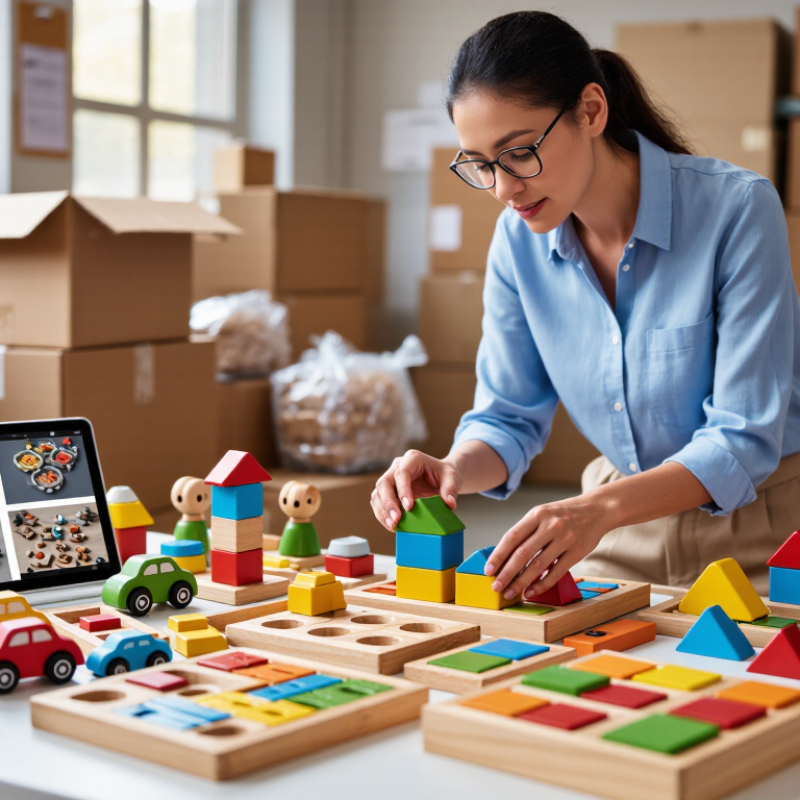
How to Import Wooden Toys from China Safely?

Classify the Toy and Identify Applicable ASTM F963 or EN 71 Requirements

Before requesting samples, classify the wooden toy by its real use, age grade, and construction. A pull-along animal, a stacking ring, and a wooden puzzle can trigger different hazard checks. Record dimensions, moving parts, coatings, cords, and any small detachable pieces. A smooth finish is not proof of safety. The U.S. Consumer Product Safety Commission’s 2023 toy injury report estimated 231,700 emergency-department-treated injuries among children aged 14 and younger. That figure is a reminder to assess foreseeable play, not just the product’s intended use.

For the U.S. market, check the current ASTM F963 edition and identify the clauses relevant to the toy’s design. These can cover mechanical hazards, sharp points, small parts, and accessible surface coatings. For Europe, review the applicable EN 71 parts, commonly including mechanical and physical properties, flammability, and migration of certain elements. Requirements depend on the toy and its materials; do not assume one test report covers every version. Ask the supplier for material specifications, coating details, and test reports tied to the exact model. Then have a qualified laboratory confirm the test plan. One weakness in many sourcing checks is relying on a generic certificate. Even a small change in paint, hardware, or age grading may make that paperwork less useful.

How to Import Wooden Toys from China Safely?

Classify the toy and identify the applicable ASTM F963 or EN 71 requirements.

This screening map highlights broad areas with corresponding provisions in both standards: mechanical and physical safety, flammability, and chemical safety. It is not a test checklist or a compliance result. Determine the toy’s intended age, function, design, coatings, and small parts first; these details affect which specific requirements and tests apply. Confirm the current editions and applicable market rules before importing.

Vet Suppliers Through Factory Audits, FSC Records, and Batch Traceability

Importing wooden toys safely starts with evidence, not polished catalog photos. Arrange an independent factory audit, either in person or through a qualified inspector. Ask to see sanding stations, coating areas, ventilation, and finished-goods storage. Check whether operators separate unfinished parts from painted pieces. A tidy showroom proves little.

Review the audit report for dated photographs, worker interviews, equipment checks, and documented corrective actions. For FSC claims, request current certificates and confirm the certificate holder, product scope, and transaction documents match the goods being purchased. A certificate alone does not establish that every wooden component in a mixed-material toy is covered. Verify details with the certifying body when records are unclear.

Require batch-level traceability before approving a purchase order. Each carton or production record should connect a lot number to timber inputs, workshop dates, inspection results, and shipment documents. Ask the supplier to trace one sample carton backward, then compare the answer with its records. Small gaps happen. Repeated gaps matter. Keep approved samples, audit findings, and corrective-action deadlines in one file, and revisit them after production begins.

Check U.S. Lead Limits: 100 ppm in Substrates and 90 ppm in Paint

How to Import Wooden Toys from China Safely?

For toys sold in the United States, check lead limits for each relevant component. Lead in accessible substrate materials must generally stay below 100 parts per million. Lead in paint and similar surface coatings must not exceed 90 parts per million. These are separate checks. A low result for the wood does not confirm that its paint is compliant.

Ask the supplier for test reports tied to the exact toy model, materials, and production batch. Have testing performed by a CPSC-accepted laboratory, and confirm that the tested samples match the finished product. Painted edges, small decorative details, and repaired areas deserve attention. Keep reports, invoices, and product records together. They matter when questions arise later.

A neat report can still leave gaps if it covers only one color or component. I would not treat a low reading as the whole story. Check whether the report identifies the coating and substrate clearly, and ask what changed after testing. Small production changes can matter. Get clarification before shipment, not after cartons arrive.

Test Age-Grade Hazards, Mechanical Safety, and EN 71-3 Chemical Migration

Before approving a wooden toy, compare its age grade with how children may actually use it. A bead, wheel, or peg may pose a choking hazard if it fits the small-parts cylinder for under-threes. The CPSC’s 2023 toy injury report estimated 231,700 toy-related injuries treated in emergency departments among children aged 14 or younger. That figure covers many toy types, but it is a useful reminder: age labels do not replace physical testing. Small parts matter.

Request mechanical test results for the finished toy, not just an unpainted prototype. Check sharp edges, accessible fasteners, pull strength, and whether wheels loosen after repeated impact. EN 71-1 covers mechanical and physical properties; EN 71-2 covers flammability. Inspect production samples too. A polished sample can hide rough joints in a later batch.

Chemical checks need equal attention. EN 71-3 measures migration of certain elements from accessible materials, including paints, lacquers, and printed details. Ask for a lab report identifying the exact model, color, materials, test method, and sample date. Compare it with the shipped batch. Limits depend on material category, so one passing report is not universal approval. Retest after changes to suppliers, pigments, or finishes. This is easy to overlook.

Inspect Shipments and Prepare Customs, Labeling, and Compliance Documents

How to Import Wooden Toys from China Safely?

Before booking a shipment, confirm the destination market’s requirements and inspection plan. The European Commission’s 2023 Safety Gate report recorded 3,412 product alerts; toys accounted for 13%. That figure is a reminder to check more than carton counts. Ask for current test reports covering the toy’s materials, finish, and age-related hazards. Requirements vary by market, so match the reports and declarations to the rules that apply at the destination.

Inspect a pre-shipment sample, then check packed goods against the purchase order. Look closely at chipped paint, splinters, loose wheels, sharp edges, and small parts. Count cartons and compare item codes, quantities, and lot markings with the packing list. A report is not a guarantee. Sampling can miss defects, and that deserves honest attention. Photograph discrepancies before loading and record which cartons were checked.

Prepare a commercial invoice, packing list, transport document, and any required origin or conformity documents. Confirm the product’s customs classification with a qualified broker; incorrect details can delay clearance. Labels should match destination rules and the actual product, including age guidance, warnings, and traceability details where required. Check label placement on the toy and retail packaging, not just the artwork proof. Keep final inspection records, test documents, and label versions together for customs questions or later follow-up.

FAQS

What lead limits should wooden toys meet in the United States?

Accessible substrate materials generally must stay below 100 parts per million. Paint and similar coatings must not exceed 90 parts per million. These are separate checks.

What should a lead test report identify?

It should match the exact toy model, materials, coating, and production batch. Check that tested samples match the finished toy. Details matter.

Is one low test result enough?

Not quite. A report covering one color or component may leave gaps. Ask what changed after testing, including repairs or coating changes.

What parts deserve extra inspection?

Check painted edges, decorative details, and repaired areas. Look for chipped paint, splinters, sharp edges, loose wheels, and small parts. Small flaws count.

How should a shipment be inspected before loading?

Compare packed goods with the purchase order and packing list. Check item codes, quantities, and lot markings. Photograph discrepancies before loading.

What documents should importers prepare?

Prepare a commercial invoice, packing list, transport document, and any required origin or conformity documents. Keep them together.

How can importers check customs details?

Confirm the customs classification with a qualified broker. Incorrect details can delay clearance. I would not guess here.

What should toy labels include?

Match labels to destination requirements and the actual product. Check age guidance, warnings, and traceability details where required. Inspect placement on both toy and packaging.

Conclusion

Learning how to import wooden toys from China safely starts with identifying the toy’s category and intended age group, then determining which ASTM F963 or EN 71 requirements apply. Before placing an order, assess potential suppliers through factory audits, review available FSC records where relevant, and confirm that materials and production batches can be traced. Clear specifications and documented quality checks help reduce surprises later.

Before shipment, arrange testing for age-grade hazards and mechanical safety, as well as applicable chemical requirements, including EN 71-3 migration testing. For U.S.-bound products, verify the applicable lead limits, including 100 ppm for substrates and 90 ppm for paint. Inspect finished goods and packaging, and prepare accurate customs, labeling, and compliance documents. Coordinating these steps with the supplier and testing provider can help ensure the toys meet the requirements for their intended market.

Madeline

Madeline

Madeline is a dedicated marketing professional with a wealth of expertise in our company's core offerings. With a keen understanding of the industry, she brings a unique perspective to her role, consistently delivering high-quality content that highlights the superior aspects of our products. As......