Choosing the right OEM wooden toy supplier can shape your product’s safety, quality, margins, and reputation. It is not merely a pricing decision.
W. Edwards Deming, a respected manufacturing-quality expert, said, “Quality comes not from inspection, but from the improvement of the production process.” His principle fits wooden toy sourcing closely. Reliable suppliers build quality into every stage, from timber selection to final packaging.
When considering how to choose an OEM wooden toy supplier, examine practical evidence. Ask where the wood comes from. Check whether finishes are child-safe and consistently applied. Request a working sample, not only attractive catalog photographs. Inspect smooth edges, joint strength, paint coverage, and packaging protection.
Details matter.
A capable supplier should explain production capacity, minimum order quantities, tooling costs, lead times, and quality-control procedures. They should also provide relevant testing documentation for your target market. Documents alone are not enough. Confirm whether the tested sample matches the finished production version.
Visit the factory when possible. Watch how workers sand small corners and separate defective pieces. Notice whether questions receive clear answers or vague promises. Communication matters when designs change.
A low quotation can hide expensive problems. Delayed shipments, inconsistent colors, or unsafe coatings may damage customer trust. Still, no supplier-selection process is perfect. Audits can miss weaknesses, and samples cannot predict every production issue. Keep written specifications, approve pre-production samples, and use staged inspections.
The best partnership is transparent, responsive, and willing to improve. Choose evidence over impressive claims. Your wooden toy deserves both careful craftsmanship and dependable accountability.
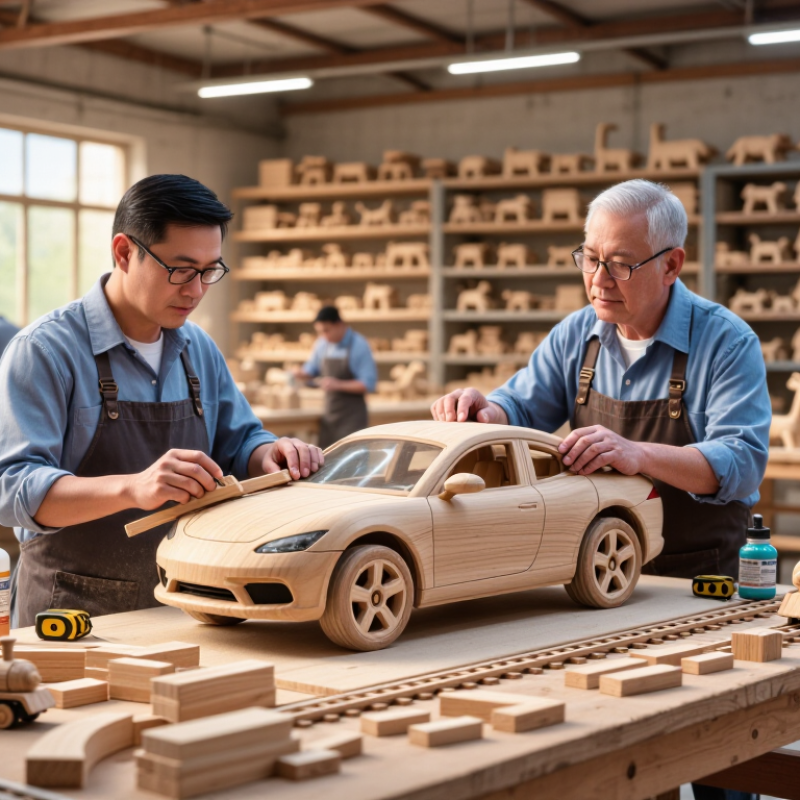
An OEM wooden toy supplier makes products for another company’s name and specifications. OEM means Original Equipment Manufacturer. The supplier may develop the design, source wood, produce samples, and handle bulk manufacturing. The buyer usually provides drawings, product ideas, packaging details, or quality requirements.
In practice, a reliable supplier should explain its process clearly. Ask about wood sources, moisture control, paint safety, edge polishing, and production testing. A factory should also provide sample approval records and product traceability. I have found that clear communication prevents many expensive mistakes. Still, a polished sample proves little. Production consistency matters more.
Tips: Request one sample before placing a large order. Check its weight, surface smoothness, smell, joints, and color. Ask how rejected pieces are separated. Confirm minimum order quantities, lead times, packaging protection, and inspection procedures in writing.
When choosing an OEM wooden toy supplier, review its experience with similar products. Skilled teams can identify weak joints, unstable coatings, and difficult assembly details early. They should welcome reasonable design changes, not hide limitations. Verify testing documents through credible laboratories when required. Requirements vary by market, so written compliance details are essential. A low price may reflect thinner wood, rushed sanding, or weaker quality control. That is not always true, but it deserves careful questioning.
| Evaluation Dimension | What an OEM Supplier Does | Typical Planning Data | What to Verify | Selection Guidance |
|---|---|---|---|---|
| Product Customization | Develops toys to the buyer’s drawings, specifications, packaging requirements, or approved samples. | Customization may include shape, dimensions, color, engraving, assembly, packaging, and instruction materials. | Request drawings, sample revisions, material specifications, and a written list of included services. | Choose a supplier with documented experience in products similar in construction and safety requirements. |
| Wood Material | Sources, cuts, shapes, dries, and finishes wood suitable for toy production. | Common toy woods include beech, birch, rubberwood, pine, and maple; the suitable choice depends on hardness, grain, cost, and design. | Ask for wood species, moisture-control procedures, legal sourcing records, and consistency between samples and mass production. | Prioritize stable, smooth, low-splinter materials with traceable sourcing and consistent density. |
| Safety Compliance | Manufactures the toy according to the safety standards required in the intended sales market. | Testing commonly covers mechanical and physical properties, flammability, migration of certain elements, coatings, and small parts. | Confirm the applicable destination-market standards, current laboratory reports, test sample identity, and corrective-action procedures. | Do not rely only on a general certificate; verify that reports match the exact product, materials, and age grade. |
| Paints and Coatings | Applies colors, stains, varnishes, or other finishes specified by the buyer. | Finish requirements should define color references, gloss level, coating layers, curing method, and allowable visual defects. | Request coating technical data sheets, restricted-substance information, adhesion checks, and rub or wear-test results. | Select suppliers able to control color consistency and document coating safety for children’s products. |
| Minimum Order Quantity | Produces a negotiated quantity per design, color, packaging format, or production batch. | A custom order may require a minimum quantity ranging from hundreds to several thousand units, depending on tooling and process complexity. | Confirm minimums for prototypes, first production, reorders, color changes, packaging, and spare components. | Choose a quantity that fits forecasted demand without creating excessive inventory or cash-flow risk. |
| Tooling and Setup | Creates or arranges molds, cutting tools, fixtures, printing plates, or special assembly equipment when required. | One-time costs can include engineering, tooling, sampling, color matching, and packaging setup. | Ask who owns the tooling, how it is stored, how long it lasts, and whether setup charges are refundable or reusable. | Obtain a separate cost breakdown so product pricing is not confused with one-time development expenses. |
| Prototype Process | Converts the design into a physical sample for functional, visual, and safety review. | A practical process usually includes design review, first sample, revision, pre-production sample, and final approval. | Confirm sample lead time, revision limits, approval records, and whether the approved sample is retained as the production reference. | Avoid mass production until dimensions, finish, function, packaging, and artwork are formally approved. |
| Quality Control | Inspects incoming materials, in-process operations, finished products, packaging, and shipment quantities. | A documented inspection plan should define critical, major, and minor defects, sampling levels, and acceptance criteria. | Request inspection checklists, production records, defect reports, corrective-action records, and pre-shipment inspection options. | Prefer measurable quality criteria instead of subjective terms such as “good finish” or “high quality.” |
| Lead Time | Schedules material purchasing, sampling, production, inspection, packing, and dispatch. | Custom production commonly requires several weeks after design approval; tooling, testing, seasonal demand, and material availability can extend the schedule. | Request separate timelines for sampling, testing, production, packaging, and shipment, including buffer time for revisions. | Evaluate schedule reliability and communication quality, not only the shortest quoted lead time. |
| Packaging and Labeling | Produces retail packaging, inserts, barcodes, warning labels, care instructions, and shipping cartons according to the buyer’s requirements. | Packaging should specify dimensions, material, artwork version, language, carton quantity, and protective requirements. | Check artwork proofing, barcode readability, required warnings, carton drop protection, and packaging waste considerations. | Approve packaging separately because packaging errors can delay otherwise compliant products. |
| Cost Structure | Quotes the product based on materials, labor, finishing, assembly, packaging, tooling, testing, and shipping terms. | The lowest unit price may exclude testing, tooling, packaging upgrades, inspection, freight, duties, or design revisions. | Request an itemized quotation with currency, validity period, price breaks, payment terms, delivery term, and all additional charges. | Compare total landed cost and risk rather than comparing unit prices alone. |
| Communication and Documentation | Coordinates technical specifications, approvals, production updates, quality records, and shipping documents. | Key documents include specifications, purchase orders, approved samples, test reports, inspection records, invoices, and packing lists. | Assess response times, English-language clarity, change-control procedures, and the consistency of submitted documents. | Choose a supplier that records decisions in writing and identifies one responsible project contact. |
| Intellectual Property and Confidentiality | Produces a buyer-owned design, custom artwork, packaging, or product concept under agreed commercial terms. | Protection may involve confidentiality agreements, ownership clauses, design files, tooling ownership, and restrictions on unauthorized production. | Confirm contract terms covering design ownership, tooling ownership, sample handling, subcontracting, and use of images or product information. | Use written agreements before sharing sensitive drawings, artwork, technical files, or launch plans. |
It develops and manufactures wooden toys for another company’s specifications. Services may include design, material sourcing, samples, production, packaging, and shipment preparation.
Provide drawings, product ideas, dimensions, colors, packaging details, and quality expectations. Clear requirements reduce costly misunderstandings.
Common choices include beech, maple, and plywood. The best option depends on strength, appearance, weight, and product design.
Check its weight, smell, smoothness, joints, color, and balance. Inspect handles, moving parts, and small gaps closely. Samples can mislead.
Ask about wood moisture, sanding, coating, edge polishing, and production testing. Request measurable inspection standards and production photographs.
Suppliers may support age grading, safety records, and testing through qualified laboratories. Requirements differ by market, so written details matter.
Approve samples in writing and confirm minimum quantities, lead times, packaging, and inspection procedures. Ask how rejected pieces are separated.
Problems can appear after sample approval. A dependable supplier reports weak joints, damaged cartons, or unstable colors early.
Not always. A low price may involve thinner wood, rushed sanding, or weaker inspections. That deserves scrutiny.
Look for similar experience, clear records, honest limitations, and consistent production. I may overvalue polished samples; production evidence matters more.
An OEM wooden toy supplier is a manufacturer that develops and produces wooden toys according to a client’s designs, specifications, packaging requirements, and target market needs. Its services may include product design support, prototype development, material selection, sample making, mass production, surface finishing, packaging, quality inspection, and shipment coordination. The production process generally moves from concept and technical drawings to prototype approval, material preparation, cutting, shaping, sanding, painting or printing, assembly, testing, packaging, and final delivery.
When considering how to choose an OEM wooden toy supplier, buyers should evaluate manufacturing experience, design and customization capabilities, communication efficiency, production capacity, quality-control procedures, and transparent pricing. OEM toys should use suitable, durable materials and non-toxic finishes while meeting applicable safety, labeling, testing, and packaging requirements in their target markets. A reliable supplier should be able to provide clear samples, production timelines, inspection records, and compliance documentation, helping ensure that the finished toys are safe, consistent, attractive, and suitable for their intended users.

 Joodle Toy